Positive Impact of Rejoining School on Children's Mindset
Discover how rejoining school helps children rebuild confidence, improve social skills, develop positive habits, and enhance their overall mindset.
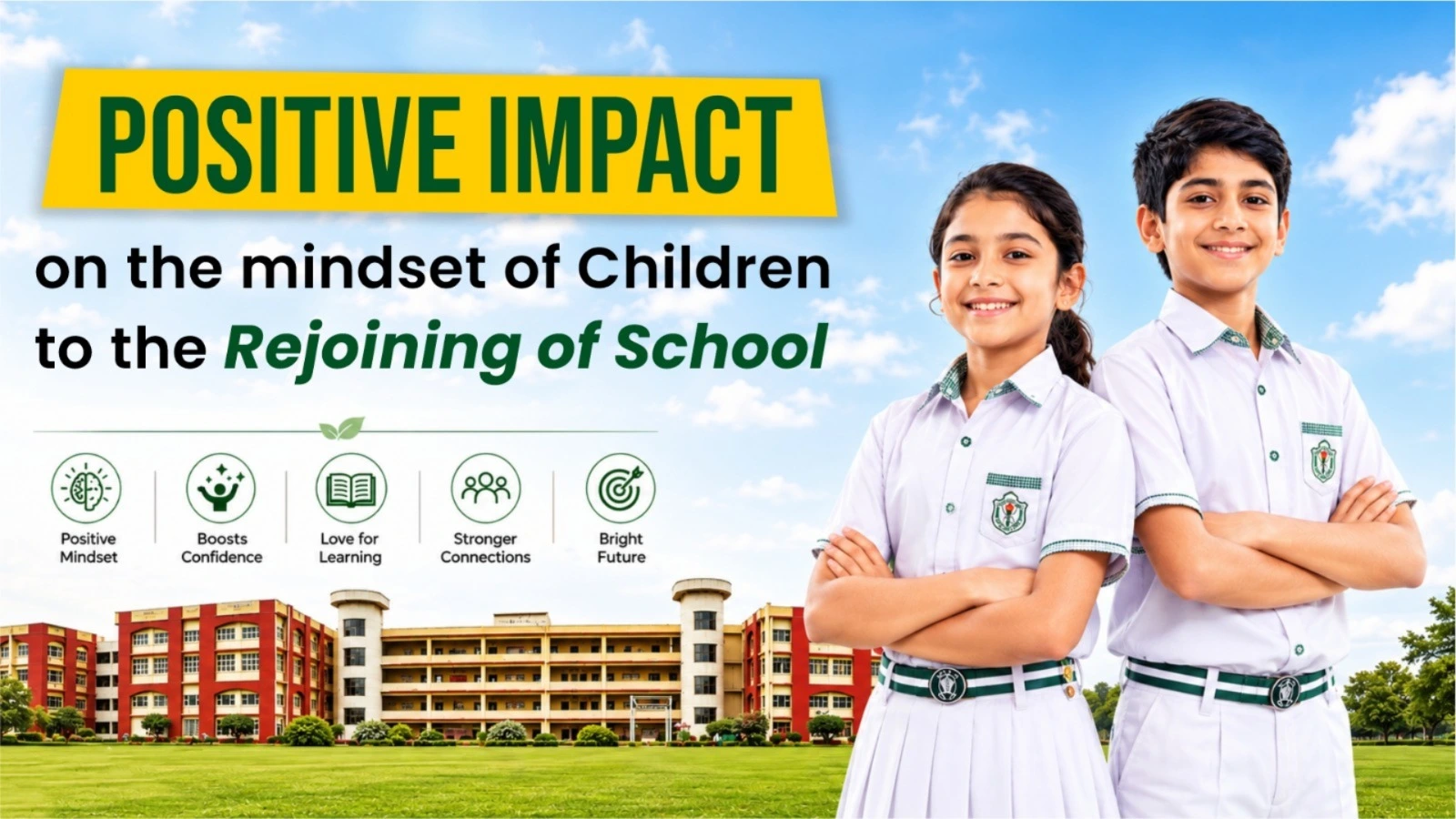
Positive impact on the mindset of children to the rejoining of school
The positive impact of rejoining school extends far beyond academics. It fundamentally transforms children's mindset development through structured social interaction and emotional regulation. This article will help understand the importance of school in your child's holistic growth, this article presents evidence-based insights. Remember when the summer breaks force kitchens to become classrooms and parents turn into substitute teachers? The activities that were practised earlier blurred, and something quietly shifted in our children. They became comfortable being by themselves as screens replaced playgrounds. Emojis substituted for facial expressions. And now, as the schools reopen, many parents quietly wonder: Is my child actually ready to be back? The truth is, returning to school does more than restart academics. It reshapes a child’s mindset. Classrooms rebuild routine. Friendships restore confidence. Playground chatter revives social skills that screens simply cannot teach. Rejoining school helps children rediscover structure, curiosity, and the simple joy of learning together. When children return to school, something powerful happens. Their minds start resetting. Research shows this clearly. A major Harvard study found that mental health diagnoses among children dropped by 43% within nine months of returning to in-person learning. Depression cases alone fell by 60%. Anxiety and ADHD also declined. The change is also biological. School routines restore sleep cycles. They reduce endless screen time. They bring back movement, play, and physical activity. All of this supports brain health. School brings subjects. But the real lessons? They often happen between classes in the form of Social-Emotional Learning (SEL). It is where children learn how to understand themselves and others. And it mostly happens through everyday interaction. Here is what children quietly learn in school and how it comes across as a positive impact of rejoining school: Emotional control:- handling frustration during group work or classroom challenges. Empathy:- reading facial expressions, tone, and body language. Conflict resolution:- arguing, negotiating, then becoming friends again. Belonging:- figuring out who they are within a group. These skills cannot grow in isolation. Schools that actively use SEL programs report fewer behavioural issues and safer environments. When children understand emotions, bullying and aggression tend to fall. At DPS, we understand this hidden truth that school is more than an academic space. It is a training ground for emotional intelligence. Learning at home keeps education going. But it has limits. Distractions are everywhere. Feedback is slow. Hands-on learning almost disappears. Classrooms change that. In school, teachers can adjust explanations instantly. Students ask questions in real time. Group discussions spark curiosity. Experiments bring concepts alive. Peer learning also plays a big role. When children explain ideas to each other, understanding becomes deeper. Research from Shanghai found that students who focused on learning rather than just grades adjusted better after returning to school. Supportive classrooms helped reduce academic stress. Children thrive on routine. Wake up. Go to school. Attend classes. Play with friends. Return home. This simple structure has a powerful impact. During long breaks or disruptions, this rhythm disappears. Sleep cycles shift. Study habits weaken. Days feel unstructured. School brings order back. The positive impact of rejoining school includes: Fixed schedules that regulate sleep and energy Clear spaces for learning and relaxation Defined roles – they are students again, not just kids at home Gradual challenges that build confidence step by step Research from Finland found that while mental health concerns rose during pandemic disruptions, feelings of loneliness dropped significantly once students returned to school. It is worth understanding that connection matters. Routine creates stability. Stability creates confidence. School is not just about classrooms. It is also about playgrounds. Everything matters when it comes to the positive impact of rejoining school: Running during recess. Playing sports. Walking between classes. Even standing during activities. Schools naturally encourage movement. They reduce excessive screen time. They create opportunities for outdoor exposure and sunlight. These small daily habits build long-term health. In an era when children are turning into couch potatoes, when childhood obesity and screen dependency are rising, school environments act as protective systems for physical well-being. Returning to school is not always easy, especially after long breaks. Some children feel nervous at first. But this transition itself builds resilience. Children relearn how to adapt. How to face challenges. How to navigate friendships and academic pressure. Studies from the Netherlands show that children with strong school support systems recover from stress faster than those without them. Schools act as recovery environments. They teach children to: handle stress develop a growth mindset set goals for the future believe in their abilities These lessons last far beyond the classroom. Because in the end, school does not just prepare children for exams. It prepares them for life. The evidence is unequivocal: the positive impact of rejoining school on child mindset development is significant and multifaceted. For parents, understanding the importance of school helps contextualise adjustment challenges. Some children will transition seamlessly; others will need support navigating social anxiety or academic gaps. Both responses are normal. What matters is consistent attendance, open communication with teachers, and patience with the process. At DPS Jankipuram, we nail it all. Our planned back-to-school sessions give children a warm welcome and double their energy + love for learning! Ans - Frequent stomachaches before school, sudden clinginess, avoiding friends, or falling grades are some signs. The constant “I don’t want to go” is also a sign. A little hesitation is normal. But if these signs stay for a month or more, it’s time to speak with teachers or a counsellor. Ans - School is a live lab for emotions. Kids learn teamwork, conflict resolution, confidence, and friendships in real time. Teachers guide them. Peers challenge them. Routines ground them. Screens teach lessons. Schools teach life. Ans - Keep routines steady. Avoid letting anxiety win over attendance. Talk to teachers often. Encourage sports or clubs. And most importantly stay calm yourself. Kids borrow their emotional cues from parents. When you’re steady, they adjust faster. Ans - Most children settle back within 2–4 weeks. New routines, friends, and classroom rhythms slowly feel normal again. Some kids adjust faster, others need a little more time. Patience, encouragement, and consistent school attendance help speed up the process. Ans - Absolutely. Sports, arts, music, or clubs help children reconnect with peers in a relaxed setting. They build confidence, reduce stress, and make school feel enjoyable again. Often, friendships formed outside the classroom make the transition back to school smoother.Introduction
1. Mental Health Recovery
Why does this happen?
Because schools offer something psychologists call structured socialisation. Kids learn how to talk. Disagree. Solve problems. Regulate emotions. All in real time. Screens cannot teach that. Studies from Malaysia showed the same pattern. When schools reopened, 72% of primary students and 59% of secondary students reported feeling genuinely happy to be back in classrooms.
In simple words: School does not just restart studies. It reboots a child’s emotional system.2. Social-Emotional Learning: The Hidden Curriculum
3. Cognitive Growth and Academic Engagement
4. Routine, Structure, and Psychological Safety
5. Physical Health and Child Mindset Development
6. Resilience Building and Future Readiness
Conclusion
Your Queries Answered
1. What are the warning signs that my child is struggling with school reintegration?
2. What are the school benefits for kids on emotional development compared to online learning?
3. What can parents do to support their child's mindset development during school transitions?
4. How long does it usually take children to readjust after returning to school?
5. Can extracurricular activities help children readjust to school life?
